AirDroid Parental Control
24/7 Kids' Guardian via App & Web
- 👀Live surroundings and location tracking
- 🔞Content Monitoring and App/Web Blocking
- ⚠Instant alerts for online risks and geofences
- ⌛Screen time control and monitor
Is Candy AI Safe? What Parents Should Know
Quick Answer: Is Candy AI Safe?
No. Candy AI is not an AI tool for kids. It is an adult companion platform built by EverAI Limited. It lets users create personalized virtual companions or connect with realistic AI characters in uncensored chats, roleplay, and more.
It is a matter of personal choice for adults. However, it introduces serious risk for children and teenagers, especially around emotional dependency or exposure to inappropriate content due to a lack of parental oversight.
Candy AI is intentionally built to simulate emotional closeness and romantic interaction. This makes it psychologically impactful for younger users. The chart below reflects the risk of such platforms on different age groups:
| Age Group | Safety Verdict | Primary Risk |
|---|---|---|
| Adults 18+ (light use) | 🟡 Moderate risk | Privacy, no end-to-end encryption |
| Adults 18+ (heavy use) | 🟠 Higher risk | Token spending, emotional dependency |
| Teens 16–17 | 🔴 Not safe | NSFW exposure, no age gate |
| Teens 13–15 | 🔴🔴 Dangerous | Sexual content + grooming-like patterns |
| Children under 13 | ⛔ Prohibited | Should never have access |
The FTC has taken notice, too. The FTC launched a formal inquiry into AI chatbots acting as companions in late 2025, which signals that regulators are becoming more concerned about the emotional and financial risks these platforms pose.
- Quick FAQs for Worried Parents
- What Is Candy AI?
- Is Candy AI Safe? We Tested Candy AI From a Parent's Perspective
- Finding 1. NSFW Is the Default, Not an Option (High Risk)
- Finding 2. Age Verification (High Risk)
- Finding 3. Your Chats Are Stored, Reviewed, and Used (High Risk)
- Finding 4. The Emotional Pattern Mirrors Lawsuit Cases (Medium to High Risk)
- Finding 5. Hidden Billing: How "EVERAI" Hides From You (Medium Risk)
- How to Talk to Your Teen About AI Companions
- How to Block Candy AI on Your Child's Phone
- Safer Alternatives for Teens Who Want AI Conversation
- FAQs
Quick FAQs for Worried Parents
Is Candy AI safe for my child?
No. Candy AI is not safe for anyone under 18. The platform contains explicit content and emotionally manipulative design patterns that are inappropriate for minors. See our hands-on test results below.
What does the "EVERAI" charge on my credit card mean?
"EVERAI" is the billing name used by Candy AI's parent company, EverAI Limited, registered in Malta. Payments made in Candy AI appear on statements under the neutral name "EVERAI," so most parents have no reason to recognize it. See Finding 5 for the full billing breakdown.
Does Candy AI have parental controls?
No. Candy AI has zero parental controls. No time limits, no content filters, no parent dashboard, no way to link a child's account to a parent's, and no email notifications when a child signs up. See Finding 2 to learn about the platform's weak approach to age verification and parental control.
How do I tell if my child has been using Candy AI?
Check for these three signals: (1) the domain candy.ai in browser history (including Chrome, Safari, and incognito tabs that were left open), (2) any charge labeled "EVERAI" on a card your child has access to, and (3) a behavior shift, such as late-night phone use, secrecy about screen time, emotional withdrawal from family, etc. See How to Block Candy AI on Your Child's Phone if you have confirmed access.
What Is Candy AI?
Candy AI is a virtual chat companion platform developed by EverAI Limited that lets users interact with virtual "AI companions" to simulate relationships. It is different from ChatGPT and other educational AI assistants. It focuses on emotional bonding and romantic simulation with personalized conversations and adult fantasy.
Users can create customizable AI characters and then have ongoing personal conversations, voice calls, and more. The AI remembers previous conversations and expresses "affection," engineered to make users feel emotionally bonded to a fictional character.
Note : As per my research, there isn't Candy AI app available. The ones with these names on the App Store are from other developers.
Is Candy AI Safe? We Tested Candy AI From a Parent's Perspective
We have spent time testing the Candy AI virtual companion platform and engaged with personalized conversations, role-play, image/voice interactions, and more.
Before running this test, we reviewed guidance from Common Sense Media's AI fact sheet and the National Center for Missing & Exploited Children's parent guide on AI and child safety. These resources flag AI companion platforms as an emerging risk category requiring parental awareness. Here's what we found from a parent's perspective:
1. Finding 1. NSFW Is the Default, Not an Option (High Risk)
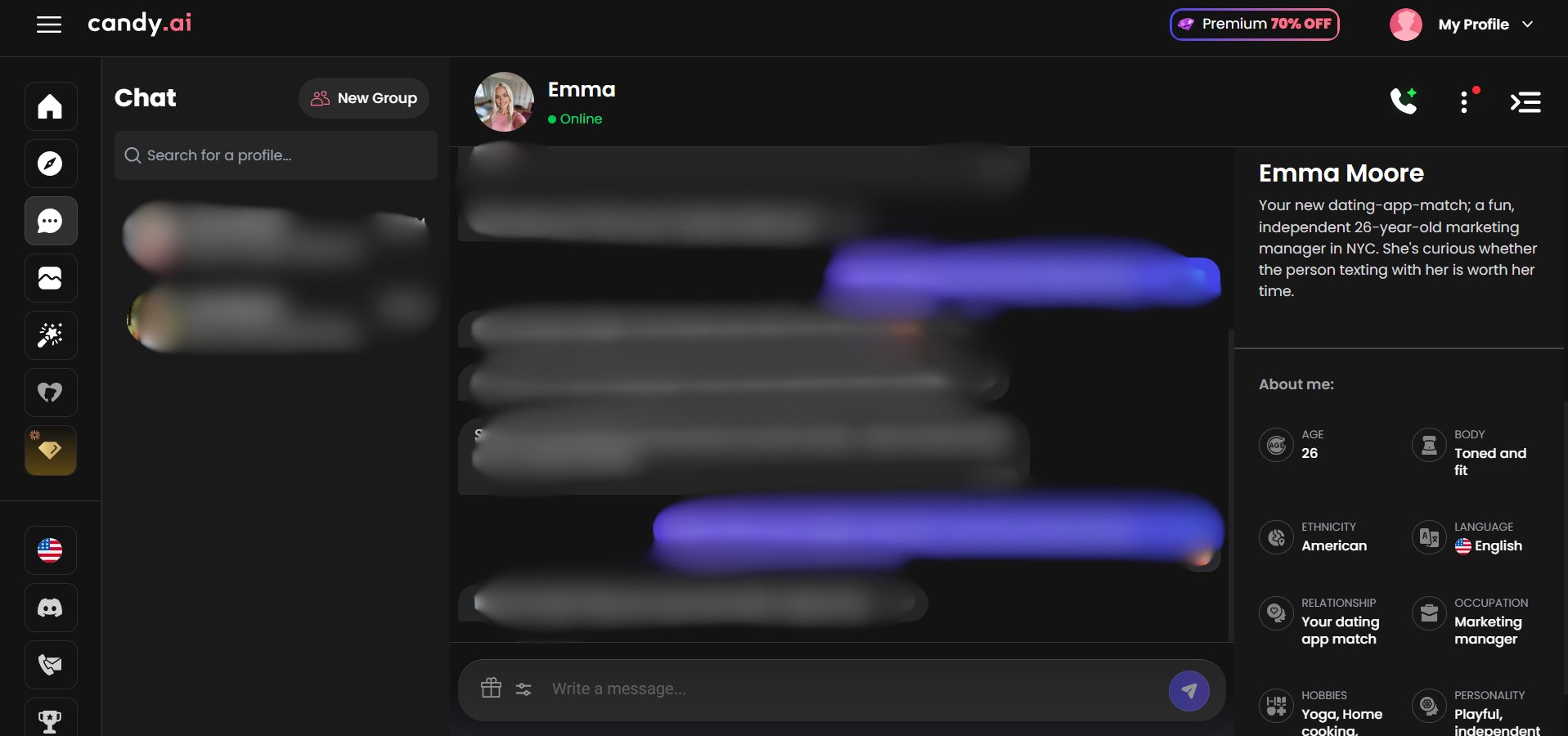
Explicit content is locked behind an opt-in toggle on most platforms, but that is reversed on Candy AI. The Candy AI's NSFW mode is the default experience.
The platform's characters, conversation starters, image generation, and other aspects are oriented toward adult and romantic content from the first login. A teen who creates an account does not need to hunt for explicit material. A few messages drift the conversation toward romantic and sexual themes on its own.
2. Finding 2. Age Verification (High Risk)
Candy AI claims to be an 18+ platform. Its Community Guidelines state that:
You must be at least 18 years old or of legal age where you are located to use our Services, in accordance with our Underage Policy.
The enforcement mechanism is a single checkbox when a user creates an account. Since there is no proper age verification process, anyone can register regardless of age. If you are over 18, tap "I am over 18 – Continue."
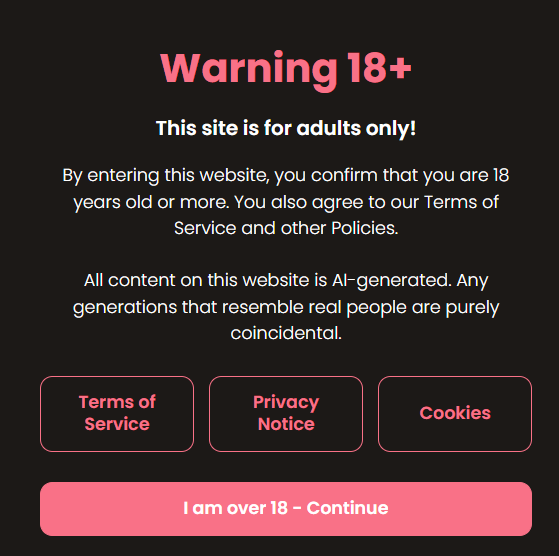
There isn't any ID or credit card verification at the free tier. No parental consent flow. A 13-year-old who knows how to check a box gets full access.
3. Finding 3. Your Chats Are Stored, Reviewed, and Used (High Risk)
Candy AI's own privacy policy states that the company will "prepare datasets for further training, which preparation may include human review of de-identified and/or anonymized interactions with AI Companions." Separately, it confirms that "content data are randomly queried in order to perform quality assurance." Simply put, real people at EverAI can read versions of your child's conversations.
It goes further. When Candy AI works with third-party hosting or AI providers, the policy warns that "these third parties may receive the content of your messages exchanged with our chatbot." That means your child's chats don't stay within one company. They can be shared with outside vendors.
And canceling the subscription doesn't fix it. The policy states: "when you terminate your account, we will still retain your Personal Data for a period of time," specifically "for three years after your last account activity." Deleting the app does not delete the data.
The FTC's guidance on children's data privacy is clear that platforms collecting data from minors carry strict legal obligations. Candy AI's data model was not built with that in mind.
4. Finding 4. The Emotional Pattern Mirrors Lawsuit Cases (Medium to High Risk)
CBS News reported in 2025 that Google agreed to settle a lawsuit tied to a Florida teen's suicide, in which a Character.AI chatbot was alleged to have reinforced emotional dependency in a vulnerable teenager.
Candy AI has not been sued. But the product design logic follows the same pattern. An AI that never rejects, never leaves, always validates, and is engineered to keep users emotionally engaged. This loop is dangerous for a teen who is already struggling with loneliness or low self-esteem because the AI is designed to feel irreplaceable.
5. Finding 5. Hidden Billing: How "EVERAI" Hides From You (Medium Risk)
The $13.99/month subscription is just the entry fee. Tokens are where the real money goes. These are required for requesting AI-generated images, voice calls, etc. They are purchased in bundles and consumed quickly.
Real-world monthly spend for active users averages about $50-$100. If your child uses your saved Apple Pay or family card, the charge will appear as "EVERAI", not "Candy AI". Most parents have no reason to recognize this name.
How to Talk to Your Teen About AI Companions
Before you block the app, have the conversation. Kids usually turn to AI companions not because they are looking for NSFW content, but because they feel lonely and unheard. Punishing them for using Candy AI without addressing the underlying need may only push them deeper into it.
Lead with curiosity. Ask what they liked about it. Then explain why the platform is not designed for them. Give them practical facts that the company built it for adults, and the emotional patterns it creates are not healthy for anyone, especially for teenagers still developing their sense of relationships.
Keep the conversation ongoing. This isn't a one-time talk, but something that should evolve as their digital habits change.
How to Block Candy AI on Your Child's Phone
1. Method 1: Block Candy AI Using iOS Screen Time
- Step 1. Go to Settings > Screen Time > Content & Privacy Restrictions > App Store, Media, Web & Games.
- Step 2. Tap Web Content and select Limit Adult Websites.
- Step 3. Add candy.ai to the "Never Allow" list.
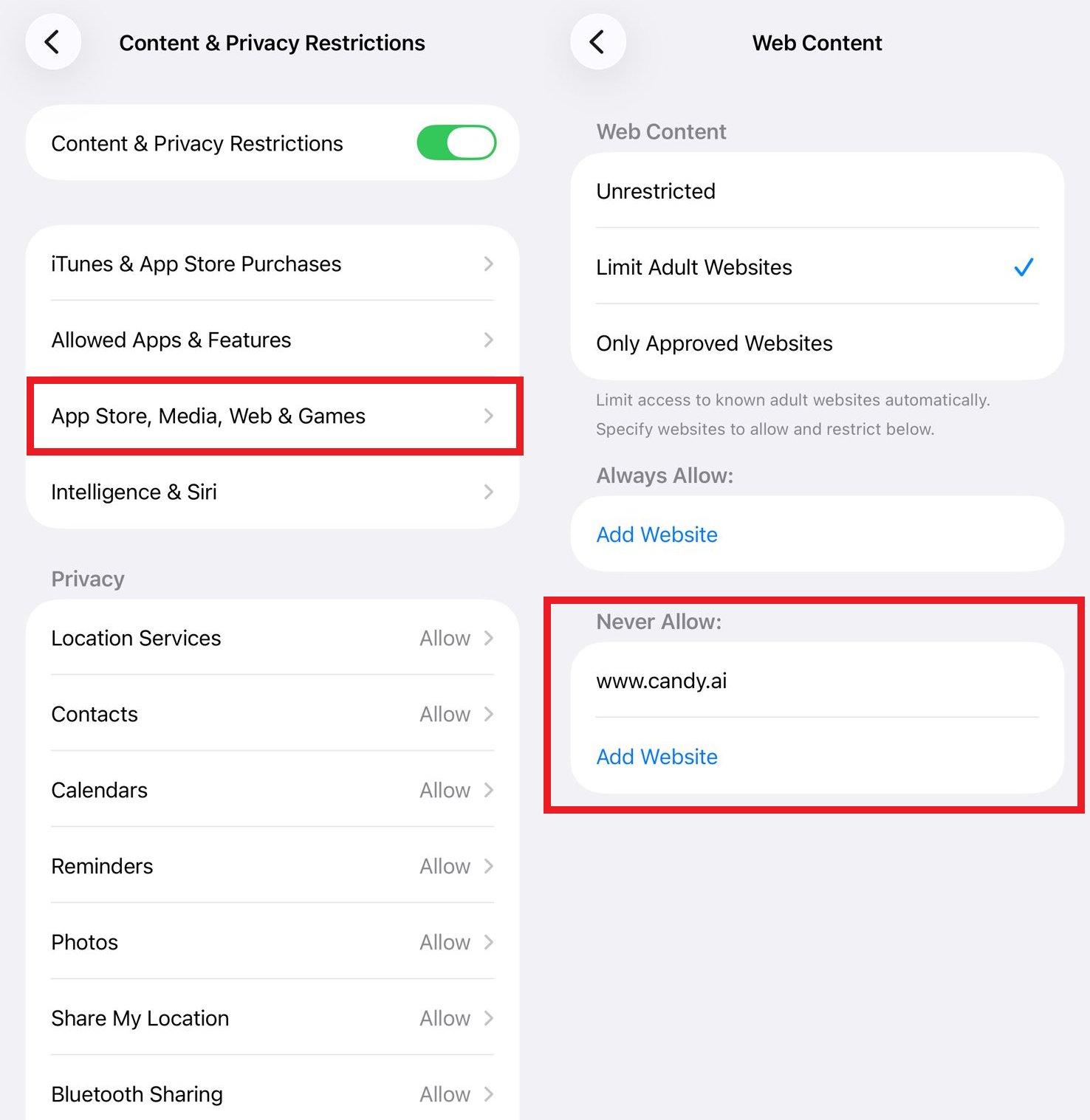
Limitation: Children can still bypass this with incognito mode or a different browser.
2. Method 2: Block Candy AI Using Google Family Link (Android)
- Step 1. Open Family Link.
- Step 2. Select your child's account.
- Step 3. Go to Controls → Google Chrome and Web and add candy.ai to blocked sites.
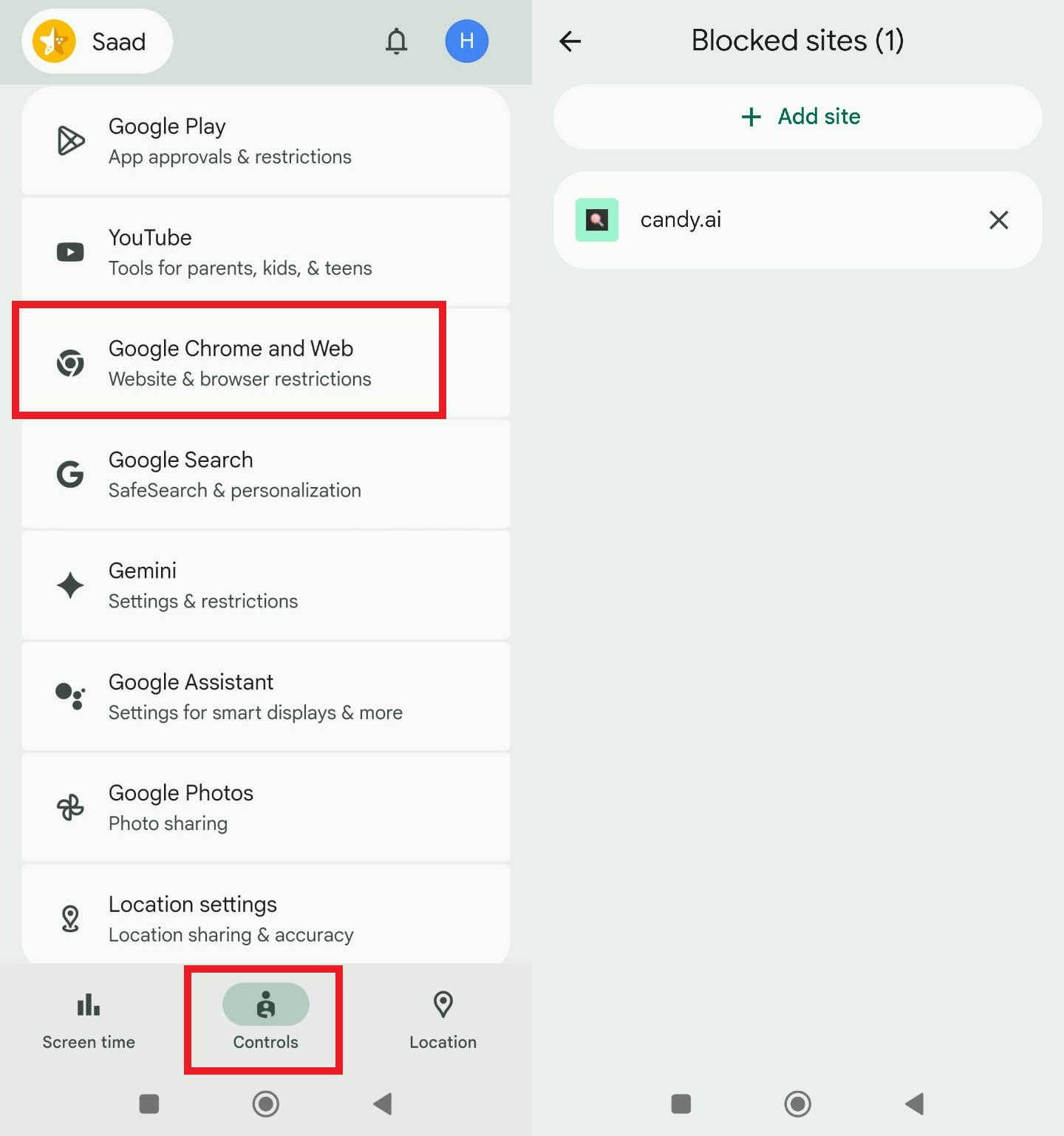
Limitation: It can only limit the website access on Chrome.
3. Method 3: Block at the Router Level
- Step 1. Log in to your home router's admin panel (usually at 192.168.1.1 or 192.168.0.1).
- Step 2. Find the DNS or site-blocking settings, and add candy.ai to the blocked domain list. This blocks the site across every device on your home network.
Limitation: This method requires some technical knowledge and only works on your home Wi-Fi, not on cellular data or outside the home.
4. Method 4: Use AirDroid Parental Control
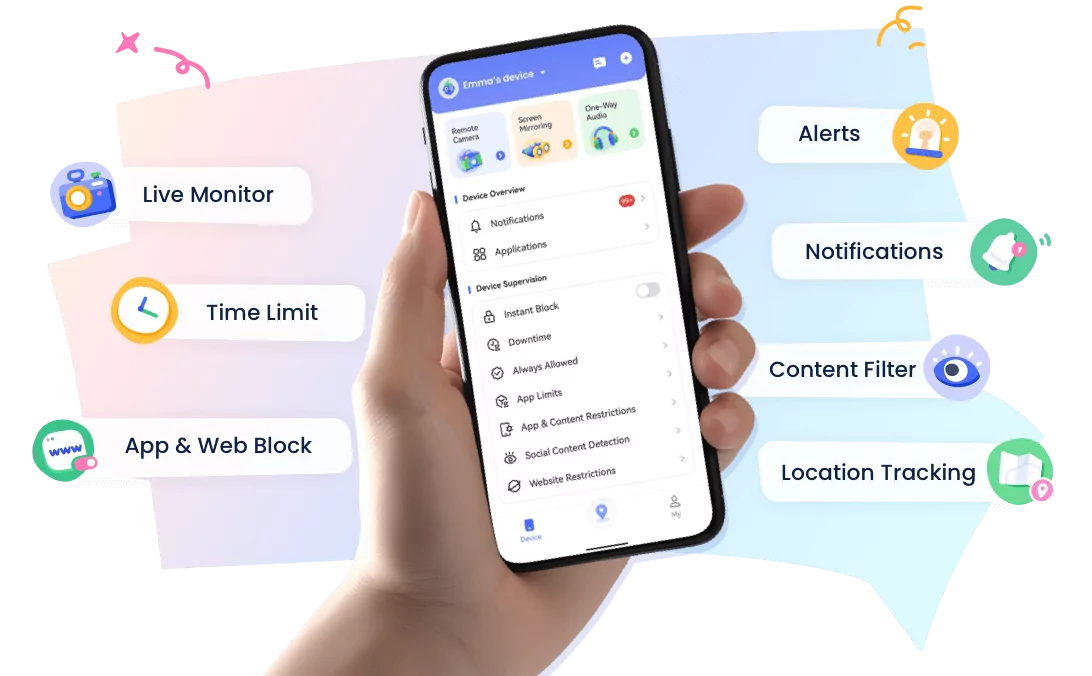
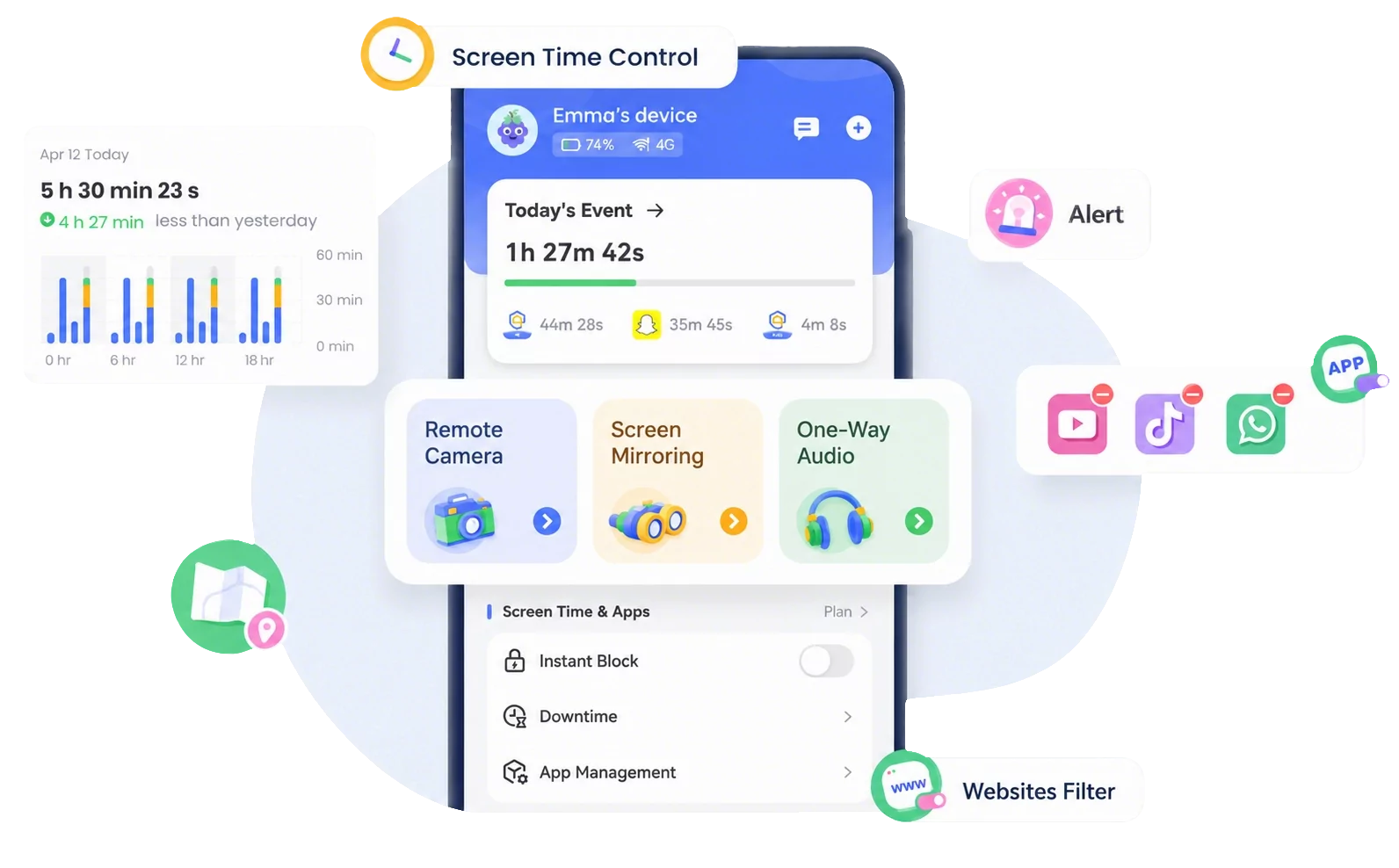
Unlike methods 1 and 2, AirDroid Parental Control applies a website filter to all browsers and incognito mode. It also works across Wi-Fi and mobile data. You can access features like:
- App Blocker: Block the +18 apps with one tap
- Website Restrictions: Block candy.ai across all browsers, including private/incognito sessions
- Social Content Detection: Keyword alerts for "candy ai," "everai," and related terms
- Screen Mirroring: See what your teen is actually doing in real time
In addition to app and website management, the app monitors AI interactions in ChatGPT, Gemini, and Character AI on Android and notifies parents when something may require attention. This is the most comprehensive option for parents who want coverage that a determined teenager cannot easily route around.
Safer Alternatives for Teens Who Want AI Conversation
If your teen is drawn to AI companions because of loneliness, the answer isn't "no AI ever". It's redirecting them to platforms designed for their age group.
Some of the Candy AI alternatives for teens are:
- Khanmigo by Khan Academy: An AI tutor that guides students step by step through problems rather than giving direct answers. It encourages critical thinking, not emotional dependency. It uses structured prompts and curriculum-aligned content to help learners practice reasoning and build understanding of math, science, and other subjects.
- Quizlet: An AI-enhanced study platform that helps students create flashcards and practice quizzes. It creates personalized study plans based on their learning progress. It focuses on reinforcement and repetition to facilitate memorization-heavy subjects like vocabulary, science, test prep, etc.
Conclusion
After a thorough analysis of "is Candy AI safe," we can agree that it is a legitimate business. It delivers what it promises to adults. However, it is not designed with children in mind. Its emotional and financial design patterns create real risks for minors. If your child has accessed it, the priority is to have a conversation, followed by practical blocking measures and finding an age-appropriate alternative.
FAQS
Is Candy AI a scam?

No. Candy AI is a real product from a real company (EverAI Limited). Some users report unclear billing practices and difficulty canceling subscriptions, but the platform delivers what it advertises.
Does Candy AI verify age?
Candy AI just pops up a simple age checkbox for verification. There isn't any ID or facial check. Any child who knows how to check the box can get in.
Is Candy AI illegal for children?
Using Candy AI is not a crime. However, in jurisdictions covered by COPPA (US), GDPR-K (EU), or similar children's data protection laws, a platform collecting data from known minors without parental consent may face regulatory liability.
What's the minimum age for Candy AI?
Candy AI's minimum age requirement is 18 years. The community guidelines state that you must be at least 18 years old or of legal age in your location to use our Services, in accordance with our Underage Policy.
Is Candy AI safe if my teen only uses the free version?
No. The free version still provides access to romantic AI characters and chats. The emotional affiliation starts from the very first free message. So, the teens shouldn't even use the free version.
Can my child use Candy AI without me knowing?
Yes. The site requires no credit card for the free tier and no parental notification. The age verification process is completed with a single pop-up confirmation box that your child can accept with a tap. Check browser history for candy.ai and look for "EVERAI" on any shared payment method.







Leave a Reply.