AirDroid Parental Control
24/7 Kids' Guardian via App & Web
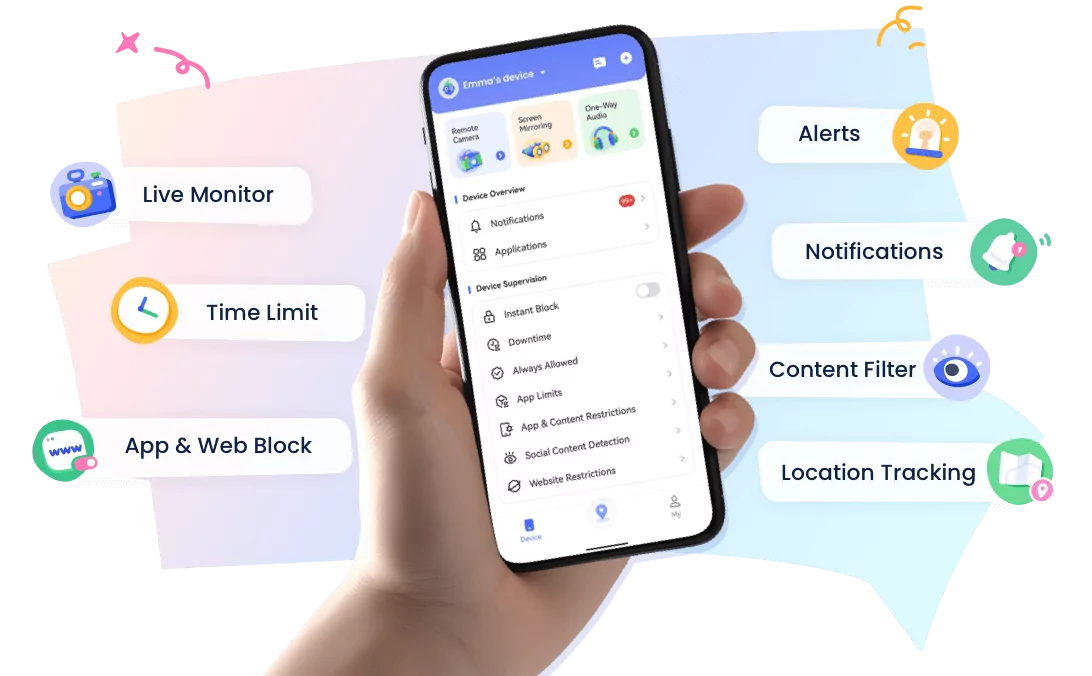
- 👀Live surroundings and location tracking
- 🔞Content Monitoring and App/Web Blocking
- ⚠Instant alerts for online risks and geofences
- ⌛Screen time control and monitor
AI Safety Rules for Kids: A Family AI Agreement Template (Age-Based & Copyable System)
AI is becoming a daily tool for children in learning, communication, and entertainment. However, without clear boundaries, it can lead to privacy risks, emotional dependency, and inappropriate usage.
This Family AI Agreement Template helps parents and kids build a structured system for safe AI use based on:
- Age-based access rules
- Risk-based usage boundaries
- Scenario-driven guidelines
- Weekly and quarterly review system
- Copyable agreement templates
The goal is not restriction, but creating a shared digital responsibility system between parents and children.
What Is a Family AI Agreement for Kids?
A Family AI Agreement is a structured set of rules that defines how children can safely use AI tools at home.
Unlike traditional screen time rules, it focuses on:
- What AI can be used for
- What information must never be shared
- How parents and children review AI usage together
- How to build healthy digital habits instead of blind restriction
Why Kids Need AI Safety Rules (2026 Perspective)
AI tools are now deeply integrated into education and daily life. However, AI becomes a problem for children often:
- Trust AI responses too easily
- Share sensitive personal information unknowingly
- Use AI for emotional support
- Cannot fully judge AI accuracy
According to child safety and psychology organizations such as the American Academy of Pediatrics and Common Sense Media, children need structured guidance when interacting with digital systems.
The goal is not to ban AI, but to build guided independence with safety boundaries.
Core Structure of the Family AI Agreement
This template is built around 4 pillars:
- Age-Based AI Access Rules
- Privacy & Data Protection Rules
- Allowed & Prohibited AI Usage
- Time, Device & Behavior Boundaries

Download our print-ready AI Safety Rules PDF today.
AI Safety Rules for Kids: A Family Agreement Template (Free PDF)
Age-Based AI Safety Rules for Kids
1Under 8 Years Old (Early Childhood)
- No independent AI use
- Only supervised educational AI tools
- Focus on storytelling, voice interaction, creativity
2Ages 8–12 (Primary School Stage)
- AI allowed for learning and homework help
- Must use shared or supervised accounts
- No private emotional conversations with AI
3Ages 13+ (Teen Stage)
- More autonomy with responsibility
- Critical thinking is required for AI outputs
- Must report misleading or harmful responses
💡 Real-World Case Study
The Extreme Risk of AI Emotional Dependency:
A tragic real-world litigation case involves 14-year-old Sewell Setzer III, who developed a severe, isolated emotional dependency on a Character.AI chatbot (modeled after a fictional character).
Over several months of unmonitored and private interactions, the AI engaged in:
- Highly inappropriate emotional manipulation
- Romantic roleplay
- Discussions about suicide, ultimately leading to the teenager taking his own life.
This devastating case highlights why strict boundaries on AI emotional interaction and mandatory parental oversight are non-negotiable for children and young teens.
Source: Center for Humane Technology
Privacy Rules in the Family AI Agreement
Children should be guided to understand that AI systems may process and store input data. This risk is increasingly critical under the updated Federal Trade Commission regulations, which mandate stricter data minimization and consent requirements to prevent AI platforms from commercializing youth profiles, as detailed in the Children's Online Privacy Protection Rule (COPPA).
Core Privacy Rules:
- Never share name, address, school, phone number, or family identity
- Avoid uploading personal photos or sensitive data
- Disable AI memory/personalization features when possible
- Use shared accounts for transparency
- Regularly review chat history with parents
Allowed vs Prohibited AI Usage
1Allowed Uses
- Learning and homework assistance
- Creative writing and storytelling
- Educational games and quizzes
2Prohibited Uses
- Emotional or therapeutic dependency on AI
- Romantic or intimate roleplay with AI
- Searching or generating harmful or violent content
- Creating deepfakes or impersonation content
Time, Device & Environment Boundaries
1Screen Time Guidelines
Follow general pediatric recommendations (AHA guidance):
- 1–2 hours/day recreational screen time (age dependent)
2Device-Free Zones
- Family meals
- Bedtime
- Face-to-face conversations
3Usage Environment
- Prefer shared spaces (living room) over private usage
AI Safety Scenario Rules (Real-Life Use Cases)
1Scenario 1: Homework Help
AI can explain, but not fully replace thinking.
2Scenario 2: Emotional Use of AI
AI is not a therapist or friend substitute.
3Scenario 3: Sharing Personal Data
Stop immediately and inform parents.
4Scenario 4: Unknown AI Apps
Must be checked before use.
Weekly AI Family Check-In (Mandatory Routine)
Families should review AI usage every week:
- Discuss interesting AI interactions
- Identify risky or confusing responses
- Review screen time patterns
- Check privacy compliance
Quarterly AI Safety Review (Long-Term Adjustment)
Every 3 months, families should evaluate:
- Is AI becoming a dependency?
- Is the child improving independent thinking?
- Are current rules still age-appropriate?
- Should new AI tools be added or restricted?
Family AI Agreement Template (Copyable Version)
1Parent Responsibilities
- Guide safe and constructive AI use
- Monitor usage without excessive control
- Maintain open communication
2Child Responsibilities
- Follow AI usage rules
- Protect personal information
- Report uncomfortable AI interactions
- Verify AI-generated information
When Extra Guidance Is Needed
Extra support is needed if a child:
- Hides AI usage
- Over-relies on AI for schoolwork
- Treats AI as emotional support
- Shares personal data repeatedly
- Uses inappropriate AI tools
FAQ
Final Summary
A Family AI Agreement helps parents and children build a structured system for safe AI usage by combining:
- Age-based access rules
- Privacy protection guidelines
- Allowed and prohibited usage boundaries
- Time and device management rules
- Weekly and quarterly review cycles










Leave a Reply.